Air-Force.ca's Fallen Comrades

They shall grow not old, as we that are left grow old


The Royal Newfoundland Regiment
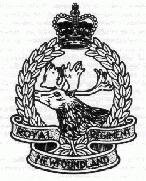


Armorial Description

A caribou head, within a wreath of laurel leaves surmounted by the Crown; below, and supporting the wreath, a scroll inscribed ROYAL NEWFOUNDLAND REGIMENT, mounted on a claret background.


Official Abbreviation: R Nfld R

Motto (Unofficial): Better Than the Best


Battle Honours (16)

First World War

    GALLIPOLI, 1915-16
    Egypt, 1915-16
    YPRES, 1917,'18
    LANGEMARCK, 1917
    France and Flanders, 1916-18
    POELCAPELLE
    ALBERT (BEAUMONT HAMEL), 1916
    CAMBRAT, 1917
    Somme, 1916
    LYS
    LE TRANSLOY
    BAILLEUL
    Arras, 1917
    Kemmel
    Scarpe,1917
    COURTRAI
Colonel-in-Chief: Her Royal Highness Princess Anne, The Princess Royal, GCVO

Authorized Marches:
Quick March: The Banks of Newfoundland

Regimental Headquarters:
Box 2028
St john's, Newfoundland
A1C 6B5

Location of Sub Units:
1st Battalion
HQ, A Company, Band
St. john's, Nfld
2nd Battalion
HQ, B Company, Band
Grand Falls, Nfld
A Company
Corner Brook, Nfld
C Company
Stephenville, Nfld

Alliances:
The Royal Scots (The Royal Regirnent)
The Castle
Edinburgh, Scotland
The Royal New South Wales Regiment
New South Wales, Australia


Order of Precedence: 48
Go back to the Infantry Regiments page.
Go back to the Army home page.
Military Word Of The Day
ATV
:
all-terrain vehicle


» Download the iPhone/iPad Military Terms app! «


Today in Military History

January 13


1842:

The British Army suffered its worst disaster in the nineteenth century with the retreat from Kabul during the First Afghan War, which reached its bloody climax on 13 January. The retreat started from Kabul on 6 January, 4,500 British and Indian troops, with 12,000 camp followers setting out for Jalalabad under Major General Elphinstone. Harassed the whole way, with horrendous losses, the last survivors, mainly from the British 44th Foot, made a last stand at Gandamak near Jagdalak Pass. Only one man escaped the carnage, Dr William Brydon, the sole survivor of a small cavalry force that attempted to break out.  He reached the safety of Jalalabad on his badly wounded pony, which died as it reached the gate - the inspiration for Lady Butler's famous painting "The Remnants of an Army".


1871:

Le Regiment de Joliette is organized as 'The Joliette Provisional Battalion of Infantry'


1896:

The Honourable Alphonse Desjardins is appointed Minister of Militia and Defence


1940:

Belgium and Netherlands order "state of readiness" in expectation of German invasion


1942:

U-Boat offensive along US East coast begins


» Download the iPhone/iPad Military History app! «


Advertising